
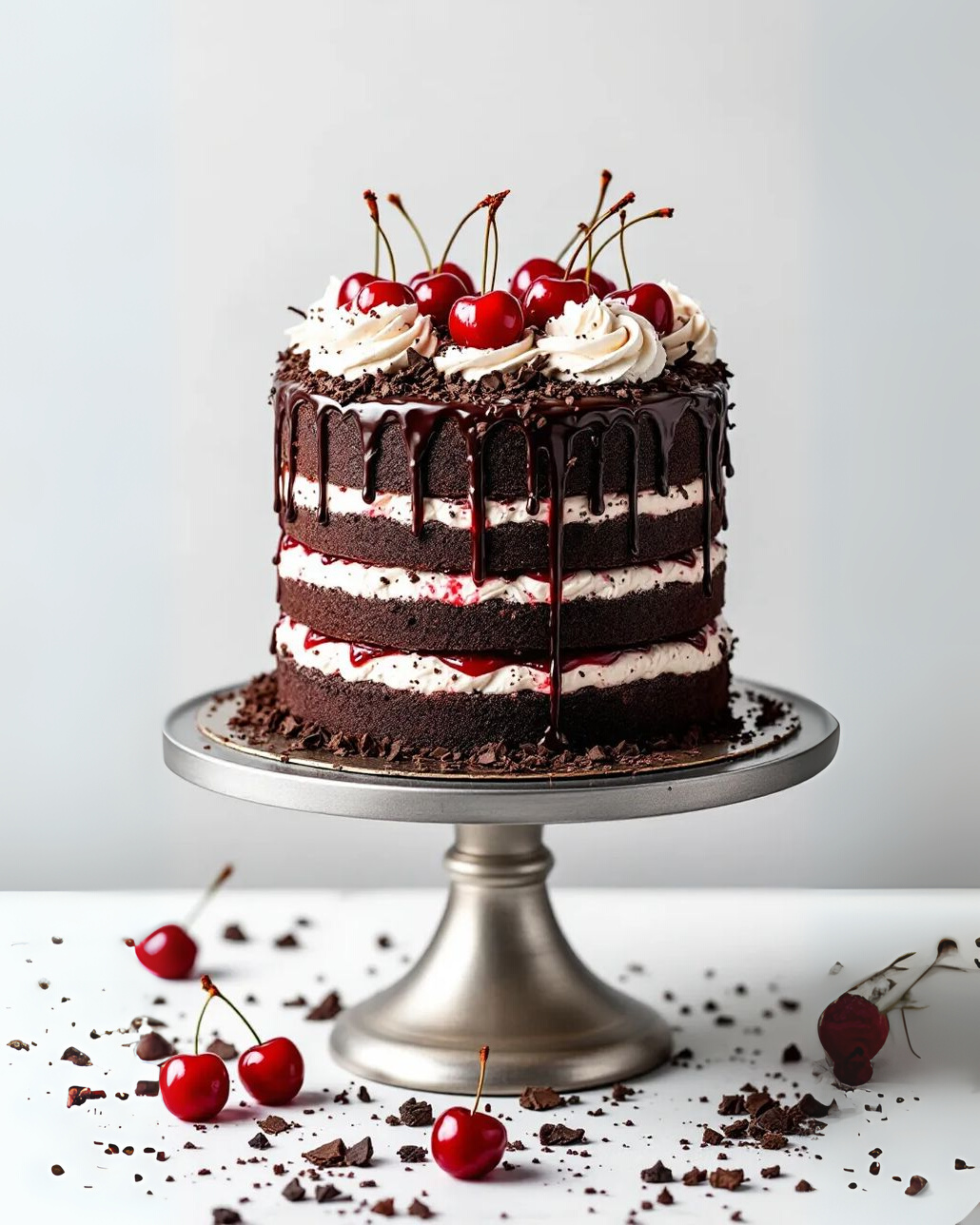
Black Forest Cake, also known as Schwarzwälder Kirschtorte, is a traditional German dessert renowned for its rich flavors and striking appearance. It consists of multiple layers of moist chocolate sponge cake, generously soaked with cherry syrup or liqueur like Kirsch. These layers are stacked with whipped cream and fresh cherries, creating a harmonious blend of sweetness and tartness. The cake is typically decorated with whipped cream, chocolate shavings, and whole or halved cherries on top, making it not only delicious but visually appealing. Its indulgent layers and fruity-chocolate combination make it a beloved treat worldwide, especially during celebrations and special occasions.
At first glance, a Black Forest cake is a visual treat — tall, layered, and beautifully decorated. The deep, dark chocolate sponge layers provide a striking contrast against the billowy white whipped cream and the ruby-red cherries. Often topped with chocolate curls, whole cherries with stems, and sometimes a dusting of cocoa or powdered sugar, it embodies rustic sophistication. Served on a white cake stand or a porcelain platter, it’s not just dessert — it’s a centerpiece.
What truly defines a Black Forest cake is its flavor profile. Each bite offers a medley of sensations: the moistness of chocolate sponge infused with cherry syrup or Kirsch (a cherry brandy), the lightness of airy whipped cream, and the pop of tart-sweet cherries, either fresh, preserved, or soaked in liqueur. The chocolate sponge, typically made with high-quality cocoa or melted dark chocolate, is rich and decadent yet surprisingly light in texture. This lightness is key, as it allows the whipped cream and cherries to shine rather than be overpowered.
Traditionally, the cake is made up of three or four layers of chocolate sponge. Each layer is brushed with Kirsch, which not only adds moisture but also enhances the cherry flavor and gives the dessert its distinctive, slightly boozy aroma. In regions or cultures where alcohol is not preferred, cherry juice or syrup is used as a substitute, preserving the essence while making it family-friendly.
Between each layer, generous amounts of freshly whipped cream and chopped cherries are spread evenly, creating a beautiful contrast in both flavor and appearance. The cream adds a soft, cloud-like texture, balancing out the intensity of the chocolate, while the cherries contribute a juicy, slightly tart note that cuts through the richness. The entire cake is then covered or topped with more whipped cream, adorned with whole cherries and elegant chocolate shavings or curls — a nod to its heritage and a treat for the eyes.
While the origins of the Black Forest cake are somewhat debated, it is widely accepted that the dessert originated in the Black Forest region of southwestern Germany, a place known for its sour cherry trees and production of Kirschwasser (cherry schnapps). The cake’s name, however, might not only refer to the region but also to the traditional costume of Black Forest women, whose black dress, white blouse, and red pom-pom hat resemble the cake’s colors. Whether this story is folklore or fact, it adds charm to the cake’s rich history.
Beyond Germany, Black Forest cake has found fans all over the world. In India, for example, it has become one of the most popular and commonly requested cakes for birthdays and celebrations. Local adaptations may include maraschino cherries, non-alcoholic versions, or even bakery-style whipped cream substitutes — but the spirit of the dessert remains.
Modern takes on the Black Forest cake have led to exciting variations — cupcakes, trifles, cheesecakes, and even vegan or gluten-free adaptations. Some versions experiment with dark chocolate ganache, mascarpone cream, or sour cherry compotes. Yet no matter how it’s reinterpreted, the essence of the Black Forest cake — chocolate, cherries, and cream — continues to capture hearts and taste buds alike.
In conclusion, the Black Forest cake is more than just a dessert — it’s a celebration of balance. It bridges the gap between richness and lightness, sweetness and tartness, tradition and modernity. Whether served at a wedding, a birthday, or simply as a weekend treat, it brings joy and elegance to the table. With every bite, you experience not just a combination of flavors but a piece of culinary history — one that continues to enchant generations.

Reviews
There are no reviews yet.