
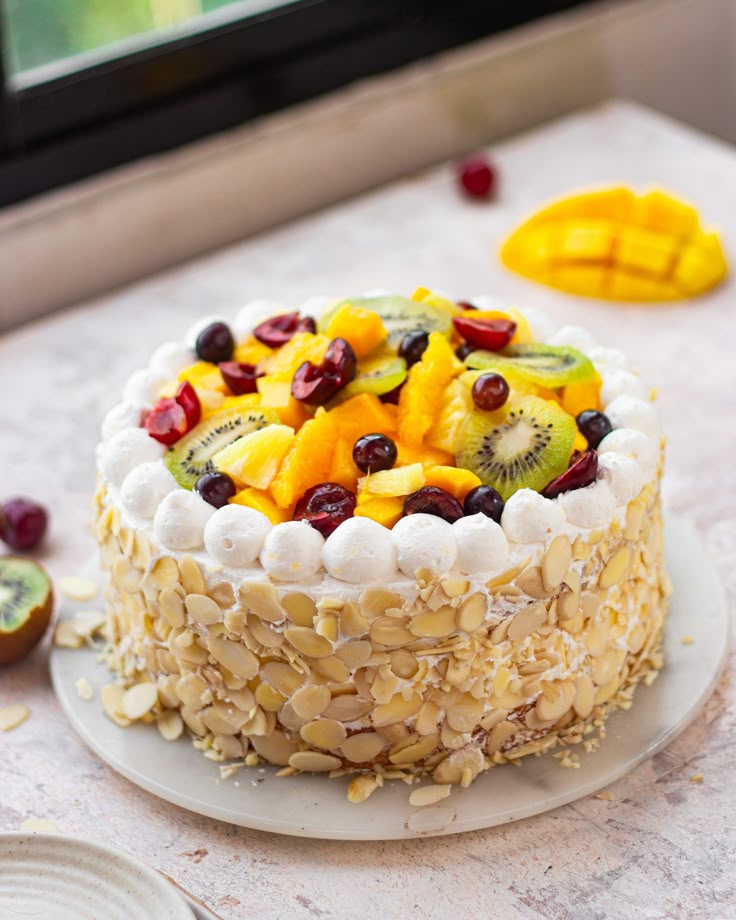
This is a delectable fruit cake topped with an assortment of vibrant fresh fruits, including kiwi slices, mango chunks, blueberries, and red berries. The cake is generously coated with almond slices on the sides, adding a crunchy texture. The top border features a ring of white frosting dollops, creating an elegant finish. The colorful fruits on top lend a fresh and inviting appearance, perfect for celebrations or special occasions. The cake is set on a simple white plate, with a blurred background that emphasizes its delicious and decorative presentation.
Fruit cake is a timeless dessert that carries a rich tradition and a delightful blend of flavors and textures. Known for its vibrant mix of dried and fresh fruits, nuts, and spices, this cake offers a unique and satisfying taste experience that has been enjoyed worldwide for centuries. Often associated with festive occasions like Christmas, weddings, and celebrations, much more than just a sweet treat—it is a symbol of warmth, tradition, and togetherness.
At its core, a fruit combines an array of colorful fruit cake such as raisins, currants, cherries, dates, apricots, and sometimes fresh fruits like kiwi, mango, and berries. These fruits provide a natural sweetness and complexity, balanced by the rich, moist cake batter, which is typically made with butter, sugar, eggs, and flour. The inclusion of nuts such as almonds, walnuts, or pecans adds a satisfying crunch and nutty aroma, creating a multi-dimensional texture in every bite.
The preparation of fruit often involves soaking the dried fruits in alcohol like brandy, rum, or sherry for several days or even weeks. This soaking process enhances the flavors of the fruit, making the cake moist and intensifying its rich taste. The alcohol also acts as a preservative, allowing cakes to age gracefully, often improving in flavor over time. This aging process makes fruit cake a special dessert that can be prepared well in advance of a celebration.
It are incredibly versatile. Some are dense and heavy, packed full of fruit and nuts, while others are lighter and fluffier, appealing to different palates. The cake can be adorned with frosting, such as marzipan and royal icing, or simply dusted with powdered sugar. Modern variations also include fresh fruits and whipped cream for a lighter, fresher taste. Garnishing the cake with sliced almonds, edible flowers, or fresh fruit adds both aesthetic appeal and additional flavor layers.
The history of fruit dates back to ancient civilizations. Romans made a type of fruit cake called “placenta,” which was layered with cheese and honey. Over the centuries, fruit cakes evolved through Europe, gaining new ingredients and techniques, influenced by trade routes and culinary innovations. By the Victorian era, cake became a staple in British holiday traditions and subsequently spread to other parts of the world, adapting to local tastes and ingredients.
this is often a centerpiece at family gatherings and holiday celebrations because it evokes nostalgia and comfort. Each family may have its own recipe passed down through generations, making every fruit cake unique. Whether served with tea in the afternoon, paired with a glass of wine, or enjoyed as a festive dessert, fruit cake brings people together and creates lasting memories.
In addition to its flavor, cake offers nutritional benefits. The fruits provide vitamins, fiber, and antioxidants, while nuts add healthy fats and protein. However, because fruit cake can be rich and sweet, it’s best enjoyed in moderation as part of a balanced diet. Cake is a beautiful combination of tradition, flavor, and celebration. Its colorful fruits, rich texture, and festive spirit make it a beloved dessert that transcends cultures and generations.


Reviews
There are no reviews yet.